
TV feature wall ideas that work in a real living room
TV feature wall ideas that hold up in daylight: sizing the panel to the screen, choosing a finish, lighting the edges and hiding the cables.
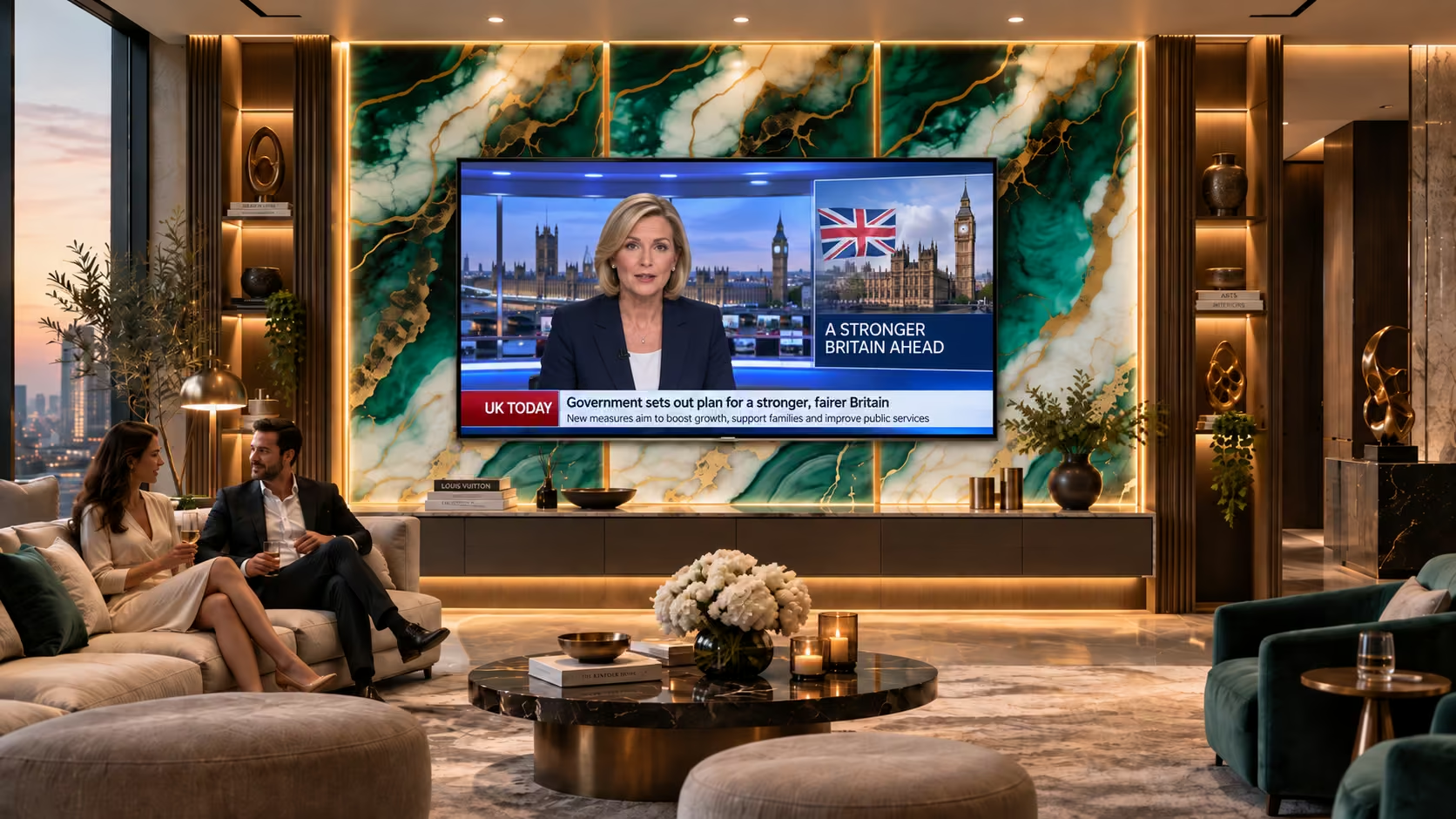
Most living rooms have one wall that everything faces, and on most of them the television hangs on bare plaster with a cable trailing down to a socket. A TV feature wall is the quickest way to make that wall look finished: a panel surface behind the screen that gives it a frame, without any building work.
Here is what makes the difference between a feature wall that looks designed and one that looks stuck on.
Size the panel to the screen, then to the wall
There are two ways to do it, and both work. Either cover the whole wall, corner to corner, so the finish reads as the wall itself. Or frame the television with a panel that is clearly wider than the screen, so it reads as a deliberate backdrop.
What does not work is the in-between: a panel a few centimetres wider than the TV. From the sofa it looks as if somebody tried to cover a mark. As a rule of thumb, leave at least 30cm of panel showing either side of the screen, and more above it than below.
For reference, a 55-inch television is about 1220mm wide, a 65-inch about 1440mm and a 75-inch about 1660mm. Mark the screen size on the wall with masking tape before you choose how many panels you need. It takes five minutes and saves most of the mistakes.
One finish, and let the room supply the contrast
A feature wall is a single finish framed in its own trim. Mixing two finishes on a wall this size tends to look busy, so take the contrast from the room around it instead.
Dark marble and graphite let a black television disappear into the wall when it is switched off, which is the look most people are after. A light marble does the opposite and frames the screen like a picture. Beside a wood floor, choose stone or a fabric effect rather than a second wood grain, and pull the colour from the sofa, the curtains or the rug.
In a narrow lounge, a pale marble with a gentle vein reflects light and makes the room feel wider. Save deep colours, metal and mirror finishes for larger rooms, where they read as rich rather than heavy.
Whatever the colour, avoid high gloss behind a screen. It looks wonderful in a photograph and reflects every window, lamp and the television itself in real life. A matt or satin face is far easier to live with.
Light the edges, not the screen
Most of the feature walls you see in pictures glow at the edges. That is an LED strip set behind the panel or its trim, washing light onto the wall around it. It makes the panel look as if it floats, and a soft light behind a television is easier on the eyes in a dark room than a bright screen against a black wall.
Choose a warm white, around 2700 to 3000K, for a living room, and make it dimmable. Colour-changing strips are fun for gaming rooms and films, but warm white is what you will leave on. Never point a light at the screen itself, or you will be watching its reflection.
Plan the cables before the panel goes up
Once a panel is on the wall, the plaster behind it is sealed. So the cabling has to be decided first. The tidy version is a socket behind the television at bracket height, and a conduit in the wall running from behind the screen down to the cabinet, so HDMI and aerial leads can be pulled through now and replaced later.
That is a job for an electrician at the start, not after the panels arrive. If the wall cannot be chased, a slim cable cover painted to match is a fair compromise below the panel, but nothing should run across the panel's face.
The television bracket fixes through to the wall behind, never to the panel itself. Our feature wall panels come with the bracket area cut out by CNC machine for exactly that reason, so the bracket fixes to the wall and not to the panel.
What goes beneath it
A floating sideboard or a low media unit finishes the look and gives the soundbar, the router and the games console somewhere to live. Keep it narrower than the panel, and leave the floor visible underneath if you can: it makes the wall look lighter and the room look bigger.
A fluted or wood-faced unit in front of a stone or marble panel is a combination that works almost every time.
Feature wall or media wall?
A feature wall is a surface. It is a few millimetres deep, goes up in an afternoon and changes how the wall looks. A media wall is a structure: modules with depth that hold the television, an electric fire, lit shelving and every cable inside them.
If you want a fire, display niches or completely hidden wiring, you want a media wall, and ours start at £1,375 plus VAT. If you want the wall behind the television to look finished and you are happy with the room as it is otherwise, a feature wall does that for a fraction of the price.
What one costs
Our feature walls are £480 plus VAT for one panel, £880 for two and £1,120 for three. Each comes CNC-cut for your TV bracket with a matching trim, and every finish is the same price: marble, stone, wood, fabric effect, solid colour, metal or mirror.
They are supply only, delivered for £165 plus VAT per order in custom-made wooden boxes, ready for you, your joiner or your installer to fit. If your wall needs more panels or a different cut, the planner prices a custom layout as you build it.
Common questions
- What is a TV feature wall?
- A finished surface behind the television: one or more decorative wall panels, framed in a trim, that turn a plain plastered wall into the focal point of the room. It is a few millimetres deep, not a built-out structure like a media wall.
- How wide should a feature wall behind a TV be?
- Either the full width of the wall, or clearly wider than the screen, with at least 30cm showing either side. A panel only a few centimetres wider than the TV looks like a mistake rather than a frame.
- What is the best finish for a TV feature wall?
- A matt or satin face, so it does not reflect the screen or the windows. Dark marble or graphite lets a black TV disappear when it is off; a pale marble frames it like a picture instead.
- Can you mount a TV on a wall panel?
- The bracket should fix through to the wall behind, never to the panel itself. That is why our feature wall panels arrive with the bracket area already cut out by CNC machine.
- How much does a TV feature wall cost?
- Ours are £480 plus VAT for one panel, £880 for two and £1,120 for three, supply only with a matching trim, in any finish. Delivery is £165 plus VAT per order.
Feature walls: one, two or three panels, any finish, same price
Written for customers in Glasgow, Edinburgh, Scotland and across the UK.