
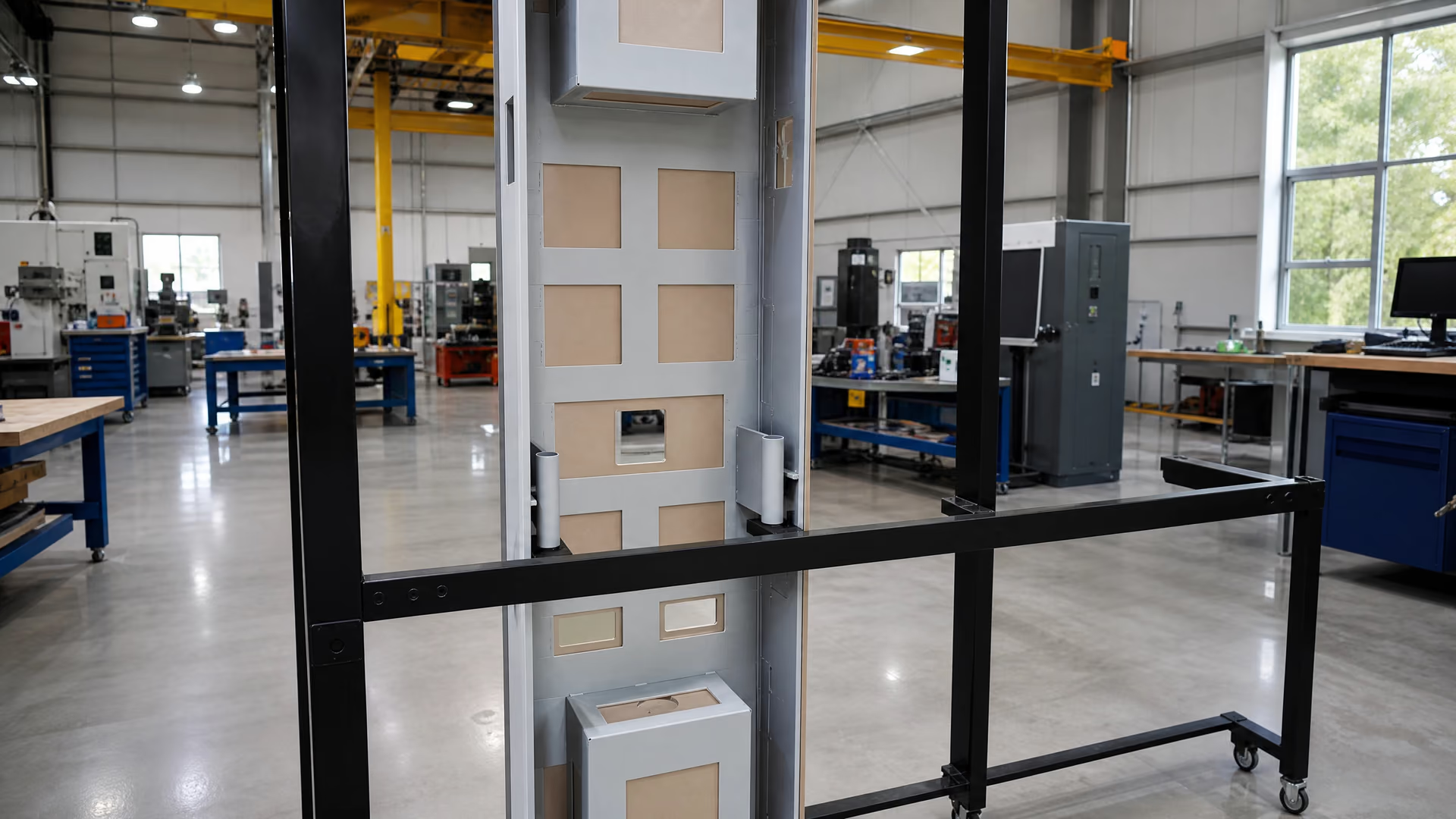
Comparison
Traditional vs smart walls: built on site, or built before it arrives?
An honest comparison of a traditionally built media wall and a factory-built modular smart wall.
Side by side
Eight things that change.
Same room, same brief. Different way of getting there.
| Traditional | Modular smart wall | |
|---|---|---|
| Installation time | Days to weeks, several trades | Two to four hours, one team |
| Mess and disruption | Plaster, dust, chasing, paint | Dry fit, no chasing, no dust |
| Precision | Depends on site conditions | Factory-built to the millimetre |
| Finishes | Paint, plaster, tiles applied on site | Stone, marble, wood, metal, fabric, mirror |
| Cabling | Chased into plaster, hard to change | Inside the module, serviceable |
| Smart features | Retrofitted, often visible | Designed in from the start |
| Predictability | Variable outcome | Built and tested before delivery |
| Moving house | Left behind | Modules can be removed and reinstalled |
What is a smart wall versus a traditional wall?
Traditional walls are built on site by multiple trades over days or weeks. A smart wall is a pre-engineered modular system built off site with finishes and cabling integrated, installed in two to four hours.
Is a modular wall as solid as a built one?
Modules use a rigid aluminium frame and are fixed to the existing wall. They feel and behave like a built-in piece of furniture.
Can I integrate TVs, fires and lighting?
Yes. TV bays with cable management, electric fires, lit shelving and ambient lighting are core options, installed cleanly with no chasing.
Plan your wall in under two minutes.
Answer three questions, see an indicative price, and pick up where you left off any time. No pressure, no obligation.