
Media wall with a fireplace or chimney breast
Planning a media wall with a fireplace or chimney breast? What to do with the breast, the alcoves, an old fire opening or a real stove.
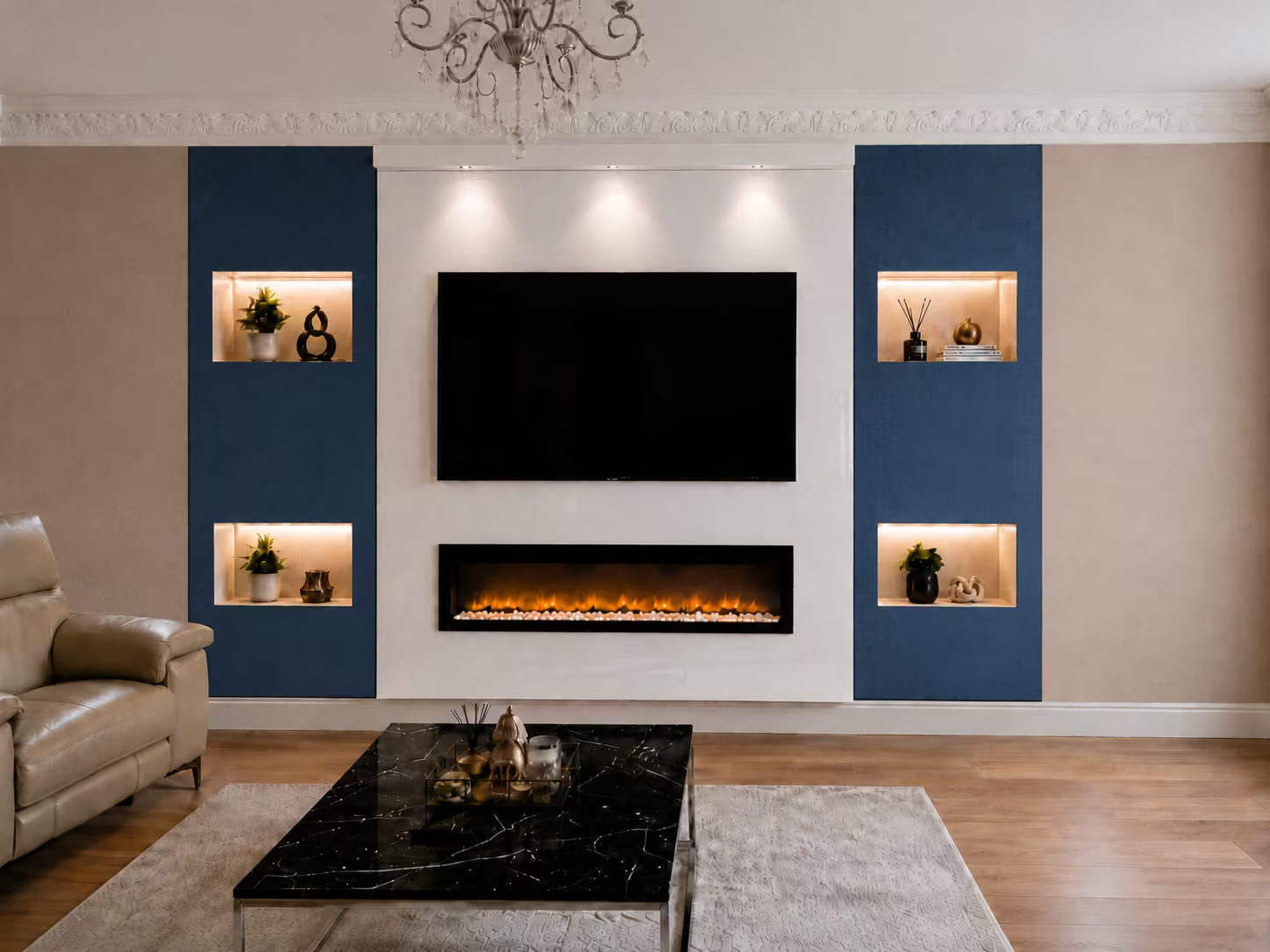
Most British living rooms were built around a fireplace, so it is no surprise that a media wall with a fireplace is one of the first things people search for when they start planning. The chimney breast is usually already the focal point of the room. The question is what to do with it.
There are three situations: a chimney breast you are keeping, an old fireplace opening you no longer use, and a live fire or stove. Each one leads to a different kind of wall.
Option 1: face the breast, shelve the alcoves
The breast becomes the media wall: a panelled face with the television above and an electric fire below, and the alcoves either side become lit shelving or low cupboards. It keeps the shape of the room and the alcove floor space, and it is the version that looks most at home in a Victorian or 1930s house.
The limit is width. Many chimney breasts are between 1.2 and 1.8 metres wide, which suits a 55-inch television comfortably and a 65-inch only on the wider ones. A screen that overhangs the breast never looks right.
If your breast is between 0.9 and 2 metres wide, our compact 800mm media wall is made for exactly that width: £1,375 plus VAT with a lit shelf, or £1,650 plus VAT with an electric fire.
Option 2: build across the whole wall
Here the frame comes forward to the face of the chimney breast and runs wall to wall, filling in the alcoves. You get one flat, wide wall with room for a larger television, a wide linear fire and display niches either side. It is the look in most media wall photos.
The cost is the floor area of both alcoves. Chimney breasts often stand 30cm or more proud of the wall, and you lose that depth across the full width of the room. In a long lounge you will not notice. In a small terraced front room you will.
You can win some of it back. The voids behind the new face are good homes for the AV boxes, the router, cable runs and a hidden cupboard door, which is storage you would otherwise have to find somewhere else.
Option 3: side units in the alcoves
The in-between version. The breast stays as it is, painted or panelled, with the television on it, and units with lit niches fill the alcoves, level with or just behind the face of the breast. You get the display shelving of a full media wall without building out the whole wall.
Our single modules, 400 to 800mm wide, are made for this. Measure each alcove separately, because the two sides of a chimney breast are rarely the same width.
What to do with an old fireplace opening
If the chimney is no longer used, there are two jobs to do before anything is built over it. First, have it capped at the top with a ventilated cap, and keep a vent at the bottom, either in the room or through the new wall. A sealed chimney with no air moving through it collects condensation, and damp coming through the breast is the last thing you want behind a new wall.
Second, decide whether the opening is part of the design. The standard British fireplace opening is 16 inches wide by 22 inches high, and plenty of inset electric fires are made to fit it, which is the cheapest way to keep a fire where the fire always was. Or close the opening off and put a wide linear electric fire lower in the new wall, where its proportions suit a modern television better.
If the fire is real: stoves and gas fires
A wood burner or multi-fuel stove changes the rules. It needs a non-combustible hearth, set clearances to anything combustible and a flue that has been installed and signed off properly. The heat coming off the top of a stove is also far more than any television is designed to sit in.
Our honest advice is to keep the media wall and the stove on different walls. If you are set on having both on one, talk to a HETAS-registered installer first and design the wall around their clearances, not the other way round. Our panels are rated A1, which means non-combustible, but a non-combustible face does not change the distances a stove needs from the television, the shelving and the equipment inside the wall.
A gas fire is a job for a Gas Safe engineer before anything else happens. Many people take the chance to have it disconnected and replaced with an electric fire, which needs no flue and can go anywhere in the room.
No fireplace at all
Plenty of media walls have no fire. In a room that already has a stove on another wall, the space where the fire would go becomes a large lit shelf, a soundbar recess or low cupboards. It also takes a four-figure item off the bill.
A radiator under the TV position is worth mentioning here. A plumber can usually move it to a side wall in a day, and it is far easier to do before the media wall goes up than after.
Measure before you choose
Three measurements decide which option you have: the width of the chimney breast, how far it stands out from the wall, and the width of each alcove. Those three numbers, a photo of the wall and the size of your television are everything we need to tell you which layout works, and the planner will price a custom one while you build it.
Common questions
- Can you put a media wall on a chimney breast?
- Yes. Either face the breast alone and use the alcoves for shelving, or build across the whole wall flush with the front of the breast. The second gives the cleanest wall but costs you the floor area of both alcoves.
- Do you need to remove a chimney breast for a media wall?
- No, and we would not recommend it. Removing a chimney breast is structural work that needs an engineer and building approval, and a media wall can be designed around the breast for far less.
- Can you put a media wall around a log burner?
- Not in the usual way. A stove needs a proper hearth and set clearances to anything combustible, and a television above one sits in rising heat. Put the media wall on another wall, or talk to a HETAS-registered installer before planning anything around the stove.
- What do you do with an old fireplace opening?
- If the chimney is no longer used, have it capped and vented top and bottom so it does not gather damp. Then either close the opening off or fit an inset electric fire, many of which are made for the standard 16 by 22 inch opening.
- Can you have a media wall without a fireplace?
- Yes. Where the fire would go, fit a large lit shelf, a soundbar recess or cupboards instead. It suits rooms that already have a stove or a radiator on that wall.
See our media walls: five fixed-price packages, installed in hours
Written for customers in Glasgow, Edinburgh, Scotland and across the UK.