
How to build a media wall: the honest guide
What a media wall is made of, the order the work happens in, where self-builders come unstuck, and when buying one built is simply cheaper.
How to build a media wall, or how to make a media wall: the question gets asked both ways and it means the same thing. We build media walls for a living, and we are still going to tell you how to do it yourself. The people who ask this question fall into two camps: joiners pricing a job for a customer, and homeowners deciding whether a weekend and a van full of timber will save them a few thousand pounds. Both deserve a straight answer rather than a sales page.
Here is the whole job, in the order it actually happens.
1. Measure the wall, not the television
Measure the wall at floor level, at eye level and at the ceiling, and write down three numbers. Almost no wall is square, and the difference between the widest and narrowest measurement decides how much scribe you need at the edges.
Then decide the depth. A media wall that houses an electric fire, a soundbar and cable runs wants somewhere around 150 to 250mm. Deeper than that and you start losing floor area you will notice; shallower and the fire will not sit in it.
2. Frame it, and fix it to something real
A timber stud frame at 400mm centres is the usual approach, with noggins wherever a bracket, a shelf or the fire will land. Metal stud is lighter and straighter and is what most commercial fitters use. Either way, the frame must be fixed back to the masonry, not just to the floor and ceiling: a television on an arm puts a surprising amount of leverage on a free-standing frame.
Set out the noggins for the TV bracket before anything else. Find the bracket's fixing centres, add noggins top and bottom, and mark them on your drawing. Moving a bracket after the wall is boarded means cutting the face open.
3. First fix: cables before boards
Everything that will ever plug into that wall has to be run now. Mains for the television and any sockets, a fused spur for an electric fire, HDMI from wherever the source equipment sits, speaker cable, an aerial or satellite feed, and a data cable if the TV is going to stream anything reliably.
Run conduit rather than bare cable, even if it costs an extra hour. In five years the cable you wish you had run is the one that is not there, and conduit is the difference between pulling a new one through and opening the wall.
The electrical work is notifiable. If you are not qualified, this is the point at which an electrician comes in, and it is far cheaper to have them on site before the boards go on.
4. Board it, and cut the openings
Plasterboard over the frame, or 18mm MDF where shelves and the fire need something to bite into. Cut the fire aperture to the manufacturer's stated opening, not to the size of the fire body, and leave the clearances the instructions ask for.
Cut the niches before you fix the boards down. Marking and cutting them on the bench is quicker and neater than doing it with a multi-tool at arm's length above your head.
5. The finish is the part that goes wrong
This is where a self-built media wall is won or lost. Tape, fill, sand, prime and paint is four days of work with drying time in between, and the result is a painted wall that shows every joint once the niche lighting rakes across it. The lighting you install to make the wall look expensive is the same lighting that shows up a flat seam.
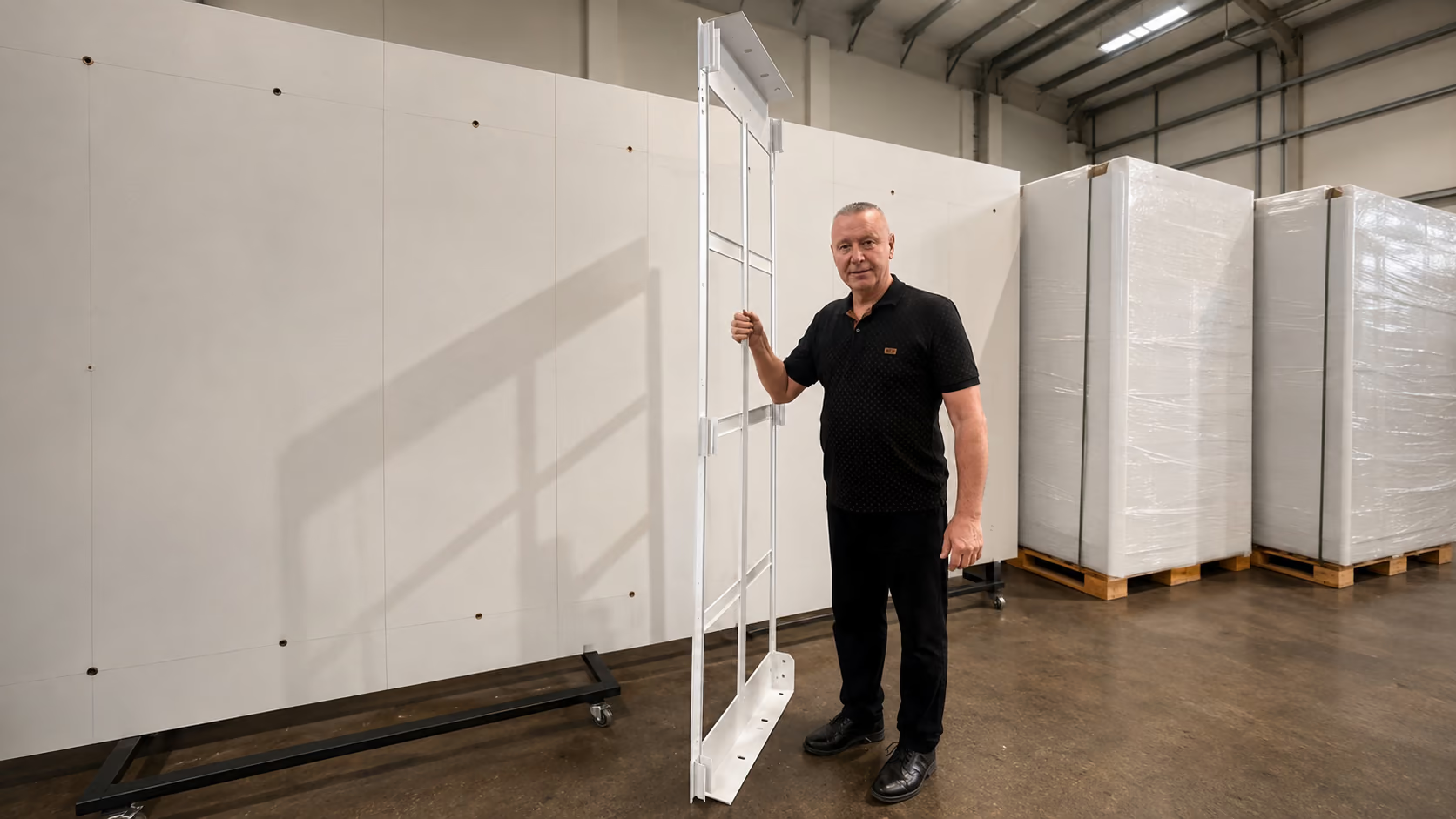
The alternative is to face the frame with a decorative panel instead of painting it. That is what we do: Carbon Rock Board, A1 fire rated, bonded to an aluminium frame, in marble, stone, wood, micro-cement, metal and mirror finishes. There is nothing to fill, nothing to paint and nothing to touch up in three years. We sell those panels on their own, at trade prices, to people building their own walls.
6. Lighting, then the equipment
LED strip in the niches, run to a driver that lives somewhere you can reach. Put the strip on the front edge of the niche facing back, not at the back facing out, or the wall will show every dot of the strip. Dim it: a niche at full brightness looks like a shop display.
Then hang the television, fit the fire, and terminate the sockets. Leave the last service loop of cable accessible behind the TV, because the next television will be a different size.
What it costs to do yourself
Materials for a self-built wall — timber, boards, fixings, adhesive, filler, paint, LED strip and the trims — usually land somewhere between £400 and £900 for a typical living room wall, before the fire, the bracket and the electrician. Our own panels are £232 plus VAT a board if you want the finish without the build.
Against that, a factory-built media wall from us starts at £1,375 plus VAT for the compact module and £1,950 plus VAT for two centre modules, delivered finished and fitted in hours. The honest comparison is not money against money: it is money against a week of your evenings and a finish you cannot easily undo.
When to build it, and when not to
Build it yourself if you have done stud work before, the wall is simple, and you are happy with a painted finish. Get a joiner if the wall is wide, out of square, or has a chimney breast in it.
Buy one built if the finish is the reason you want a media wall in the first place. Marble, micro-cement and metal effects cannot be achieved with paint, and that is usually the actual brief behind the question.
Common questions
- Can you build a media wall yourself?
- Yes, if you are confident with a stud frame, a multi-tool and first-fix cabling. The wall itself is straightforward carpentry. The finish is where most self-builds fall down, because a painted MDF face shows every joint and every screw once the lighting is on.
- What do you build a media wall out of?
- A timber or metal stud frame fixed to the masonry, a sheet material over it, and a finish. We use an aluminium frame with decorative wall panels bonded to it, because it stays straight, it is A1 fire rated and it needs no painting.
- What do you need to make a media wall?
- Timber or metal studs, plasterboard or 18mm MDF, fixings and adhesive, filler and paint or a decorative panel for the face, LED strip and a driver for the niches, and a TV bracket. Tools: a drill, a level, a saw, a multi-tool and a caulking gun. The electrical work needs an electrician.
- How long does it take to build a media wall?
- On site, a fitted media wall is usually four to seven days from first fix to final paint, with drying time between coats. A factory-built wall is delivered finished and installed in two to four hours.
- Do you need building regulations approval for a media wall?
- Not for a stud wall built against an existing wall in a house. You do need a qualified electrician for the socket, the fused spur for a fire and any new lighting circuit, and that work is notifiable.
Written for customers in Glasgow, Edinburgh, Scotland and across the UK.