
Choosing an electric fire for a media wall
How to choose an electric fire for a media wall: the right type, the right width, how much heat you need, the gap to the TV and what it costs to run.
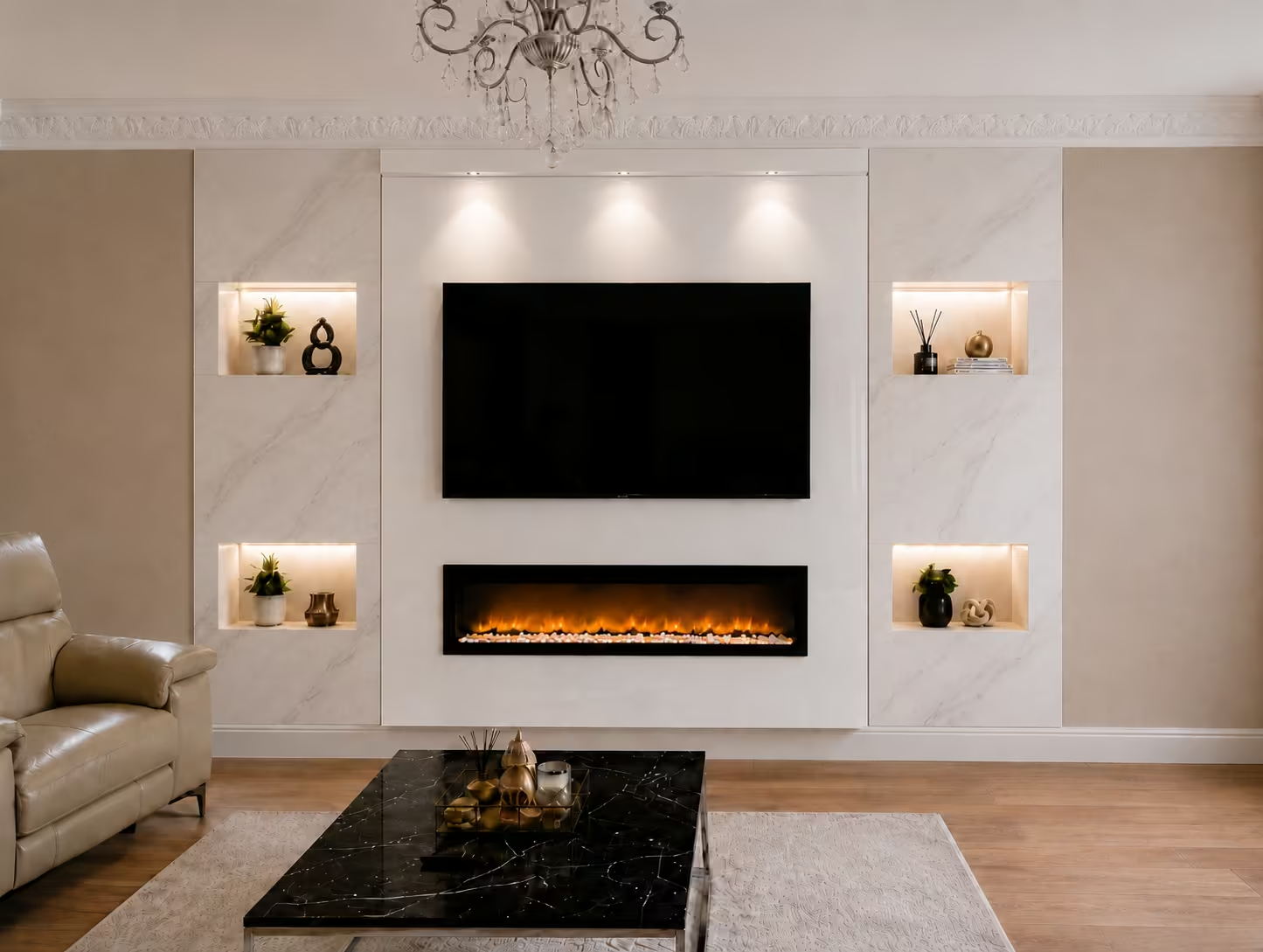
The electric fire is usually the second thing people choose for a media wall, after the television, and the one they spend the least time on. That is a shame, because it is the part you cannot swap in five years without opening the wall. A television hangs on a bracket. A fire is built in.
Here is what matters when you choose one, in the order we would think about it.
Inset, wall-mounted or freestanding
Electric fires come in three shapes, and only one of them belongs in a media wall. An inset fire, also sold as a recessed or in-the-wall fire, is a box that sits inside the wall with only the glass and a slim trim showing. That is what a media wall is built around.
Wall-mounted fires, the on-the-wall kind, hang flat on the plaster like a picture and have a finished case all round. Freestanding fires and electric stoves sit on the floor or a hearth. Both are fine products, but set into a media wall they leave you with a visible case sitting in a hole, which is exactly what the wall was meant to hide.
When you read a product listing, look for the words inset, recessed, built-in or media wall fire, and an installation drawing that gives a cavity size. No cavity size usually means it was not designed to go into a wall.
Size it to the television, not the wall
Fires are sold by width, usually in inches: 40, 50, 60 and up. The mistake we see most often is buying the widest fire the wall will take. A fire wider than the screen above it makes the television look small and the whole wall look bottom-heavy.
The rule we work to is simple: either match the width of the television, or go clearly narrower. A 55-inch TV is about 1220mm wide, a 65-inch about 1440mm and a 75-inch about 1660mm. A fire within a couple of centimetres of that width looks deliberate. So does one a third narrower. A fire ten centimetres off, either way, looks like a near miss.
On a narrow wall, turn the fire on its end. A vertical fire below a smaller television is how our compact 800mm module fits a fire and a TV onto a wall under two metres wide.
Heat: do you actually need it?
Most media wall fires have two parts that work independently: the flame effect and a fan heater. The flame is lighting and uses very little electricity, so you can run it all evening in July. The heater is typically rated between 1 and 2kW, much like a small fan heater.
Be honest about how the room is heated. If the central heating keeps the lounge warm, the heater is a top-up you will use a few evenings a year, and a fire chosen for its looks is the right call. If the room is cold, north-facing or in an extension with a weak radiator, a bigger heater earns its keep.
That is the whole difference between the two fires we fit. The slimline LCD fire is £1,318.50 plus VAT. The premium heat output fire, which carries the larger heater of the two, is £1,693.80 plus VAT.
To work out what the heater costs to run, multiply its rating in kilowatts by your unit rate. A 2kW heater on full for an hour uses 2kWh, so it costs twice whatever you pay per kWh. Most fires have a thermostat, so once the room is warm the heater cycles off and the real figure is lower.
Flame effects, and how they look at night
There are three kinds on the market. LED flame projection is the most common: a moving pattern of light behind the glass, often over a log or crystal bed. LCD fires, which is what we fit, show the flame on a display panel, so the movement looks less like a loop. Water vapour fires, such as Dimplex's Opti-myst, light a fine mist from below, which gives the most three-dimensional flame but needs its water tank refilled and a deeper cavity.
Judge a fire with the room lights down, not in a bright showroom. That is when you will use it, and it is when a cheap flame effect looks most like a screensaver.
Check that you can dim the flame, change its colour and run it without the heat. A fire you cannot dim will dazzle in a dark room.
The gap between the fire and the television
Warm air rises, and some fires push their heat out through a vent along the top edge. Put a television straight above that and you are warming the back of an expensive screen. Look at the installation sheet for two things: where the heat comes out, and the minimum distance the maker asks for to anything above it. A fire that vents from the front can sit much closer to a TV.
The other gap is about your neck. A television pushed up the wall to make room for a tall fire is one you watch with your chin up. Put the middle of the screen at roughly seated eye level first, then fit the fire into the space below it, not the other way round.
Installation: the parts people forget
An inset fire's instructions give a cavity size, and often air gaps or vents in the surround. Build to those numbers exactly. They stop the fire overheating, and a fire fitted outside them is usually outside its warranty too.
Plan the power before the wall goes up. Most fires either plug into a socket or are wired to a switched fused spur, and either way the switch should be somewhere you can reach without taking the fire out. Agree the position with your electrician at first fix.
Photograph the label with the model number before the fire goes in. If it ever needs a part, the supplier will ask for it, and once the fire is in the wall you can no longer see the label.
Already bought a fire?
That is fine. Give us the model and its cavity size before your wall is made and we build the module around it at no extra cost. The important word is before: the opening is cut in the factory, and it is cut to the fire we have been told about.
Common questions
- What type of electric fire goes in a media wall?
- An inset fire, also sold as a recessed or in-the-wall fire: a slim box that sits inside the wall with only the glass and a trim showing. Wall-mounted and freestanding fires have a finished case all round and are the wrong shape for a built-in wall.
- What size electric fire do I need for a media wall?
- Size it to the television, not the wall. Either match the TV's width or go clearly narrower. A 55-inch TV is about 1220mm wide, a 65-inch about 1440mm and a 75-inch about 1660mm.
- Can you put a TV above an electric fire?
- Yes, it is the normal media wall layout. Check where the fire's warm air comes out: a fire that vents from the top blows heat at the screen, so leave the gap its instructions ask for, or choose one that vents from the front.
- How much does an electric fire cost to run?
- The flame effect alone uses very little, because it is lighting. The heater is what costs money: a 2kW heater on full uses 2kWh an hour, so an hour of full heat costs twice your electricity unit rate. A thermostat brings the real figure down.
- Do electric fires in media walls need ventilation?
- Most inset fires need a cavity of a stated size, and some need air gaps or vents in the surround. Build to the manufacturer's installation sheet exactly, because that is also what keeps the warranty valid.
See our media walls: five fixed-price packages, installed in hours
Written for customers in Glasgow, Edinburgh, Scotland and across the UK.